
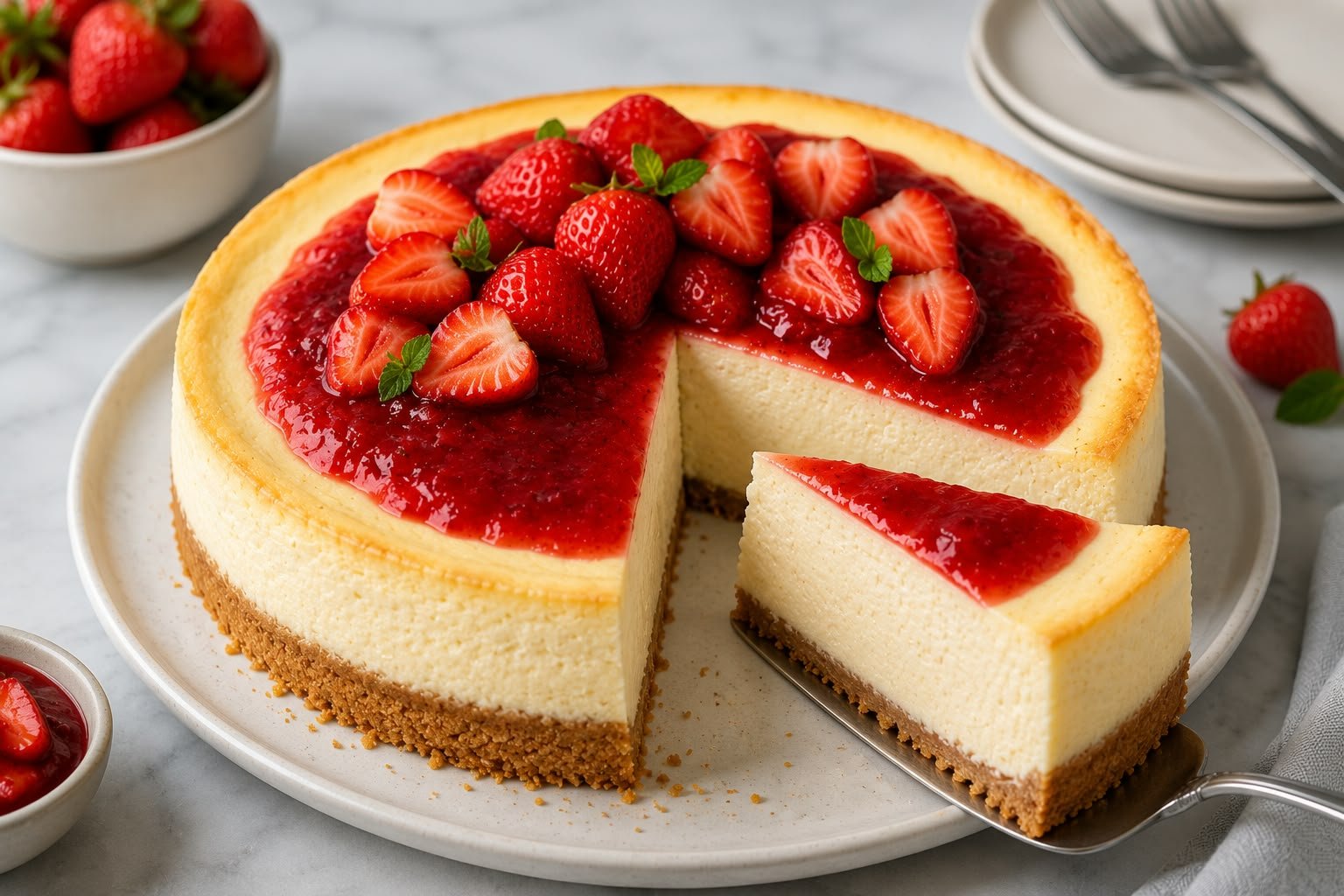
A classic New York cheesecake is one of those desserts that always feels special. With a smooth, creamy filling, buttery graham cracker crust, and lightly golden top, this homemade cheesecake is perfect for birthdays, holidays, family dinners, or a relaxing weekend baking project. The recipe uses simple ingredients, but the result tastes like a dessert from a professional bakery.
Why You’ll Love This Cheesecake
This cheesecake has a rich texture without being overly sweet. Cream cheese creates the signature creamy filling, while sour cream adds a subtle tanginess that balances the sweetness. The graham cracker crust provides a buttery, slightly crunchy contrast.
Another advantage is that you can prepare this dessert a day before serving. In fact, chilling the cheesecake overnight usually makes the texture even better and allows the flavors to develop.
Whether you are an experienced baker or making cheesecake for the first time, this recipe is straightforward and easy to follow.
Ingredients
For the crust:
– 2 cups graham cracker crumbs
– 5 tablespoons melted unsalted butter
– 2 tablespoons granulated sugar
For the filling:
– 32 ounces full-fat cream cheese, softened
– 1 cup granulated sugar
– 1 cup sour cream
– 4 large eggs
– 2 teaspoons vanilla extract
– 2 tablespoons all-purpose flour
– 1 tablespoon fresh lemon juice
– 1/4 teaspoon salt
For serving, you can use fresh strawberries, blueberries, raspberry sauce, whipped cream, chocolate sauce, or powdered sugar.
How to Make New York Cheesecake
Step 1: Prepare the Crust
Preheat your oven to 350°F (175°C). Grease a 9-inch springform pan and line the bottom with parchment paper if desired.
Combine the graham cracker crumbs, melted butter, and sugar in a bowl. Stir until the crumbs are evenly moistened.
Press the mixture firmly into the bottom of the pan. Use the bottom of a glass or measuring cup to create an even layer.
Bake the crust for about 8–10 minutes, then remove it from the oven and allow it to cool while preparing the filling.
Step 2: Make the Cheesecake Filling
Place the softened cream cheese in a large mixing bowl. Beat it on medium-low speed until smooth and creamy.
Add the sugar gradually and continue mixing until combined. Add the sour cream, vanilla extract, lemon juice, flour, and salt.
Add the eggs one at a time, mixing gently after each addition. Avoid overmixing once the eggs are added because too much air can cause the cheesecake to puff up and crack during baking.
The finished filling should be smooth, thick, and completely free of large lumps.
Step 3: Fill the Pan
Pour the cheesecake mixture over the cooled crust. Gently tap the pan on the counter a few times to release large air bubbles.
Smooth the surface with a spatula. Make sure the filling is spread evenly so the cheesecake bakes at the same rate throughout.
Step 4: Bake the Cheesecake
Place the cheesecake in the oven and bake at 350°F for approximately 50–60 minutes.
The edges should look set while the center should still have a slight jiggle when the pan is gently moved. Do not wait for the center to become completely firm because the cheesecake will continue setting as it cools.
Turn off the oven and leave the cheesecake inside with the door slightly open for about 30 minutes. This gradual cooling can help reduce the chance of cracks.
Remove the cheesecake and let it cool completely at room temperature before refrigerating.
Step 5: Chill Before Serving
Once the cheesecake has cooled, cover it and refrigerate it for at least 6 hours, preferably overnight.
Carefully remove the springform pan before serving. Use a sharp knife dipped in warm water to create clean slices, wiping the knife between cuts.
Tips for a Perfect Cheesecake
Use full-fat cream cheese for the richest texture. Low-fat cream cheese contains more water and may produce a softer filling.
Make sure your cream cheese and eggs are close to room temperature before mixing. This helps create a smoother batter and reduces lumps.
Avoid opening the oven repeatedly while the cheesecake is baking. Sudden temperature changes can affect the texture and increase the chance of cracks.
Do not overbake the cheesecake. A slight movement in the center is a good sign. The dessert will become firmer as it cools and chills.
If you want an especially smooth top, bake the cheesecake in a water bath. Wrap the outside of the springform pan tightly with foil and place it in a larger roasting pan filled with hot water.
Topping Ideas
Classic cheesecake tastes wonderful on its own, but toppings can make it even more exciting. Fresh strawberries and blueberries add color and a refreshing flavor.
For a chocolate version, drizzle melted chocolate or chocolate sauce over each slice. Caramel sauce, crushed cookies, toasted nuts, or berry compote are also excellent choices.
You can even serve each slice with a spoonful of whipped cream for an extra creamy dessert.
For a simple summer dessert, add a mixture of fresh berries and a small amount of honey. The fresh fruit provides a bright contrast to the rich cheesecake.
How to Store Cheesecake
Store leftover cheesecake covered in the refrigerator for up to five days. Keep toppings separate when possible so the crust does not become soggy.
Cheesecake can also be frozen. Cut it into individual slices, wrap each slice tightly, and place the pieces in a freezer-safe container. Thaw the slices overnight in the refrigerator before serving.
Freezing individual portions is especially useful if you do not want to eat the entire cheesecake at once.
Frequently Asked Questions
Can I Make Cheesecake Without a Springform Pan?
Yes, but a springform pan makes removing the cheesecake much easier. If you use a regular cake pan, line it carefully with parchment paper and leave some paper extending over the edges.
Why Did My Cheesecake Crack?
Cracks can happen because of overmixing, overbaking, or sudden temperature changes. Cooling the cheesecake gradually and avoiding excessive mixing can help prevent cracks.
Even if your cheesecake develops a small crack, it will still taste delicious. You can easily cover the top with berries, whipped cream, or chocolate sauce.
How Long Should Cheesecake Chill?
For the best texture, refrigerate it for at least six hours. Overnight chilling is ideal because it gives the cheesecake enough time to become firm and creamy.
Final Thoughts
This Classic New York Cheesecake Recipe is a rich, creamy dessert that is surprisingly simple to make at home. The buttery graham cracker crust, smooth cream cheese filling, and endless topping options make it suitable for almost any occasion.
Prepare it a day ahead, let it chill thoroughly, and serve each slice with fresh berries, chocolate, caramel, or whipped cream. The combination of creamy filling and buttery crust makes every bite satisfying.
Once you try this homemade cheesecake, it can easily become a favorite dessert for family celebrations, holidays, dinner parties, and special weekends. With simple ingredients and a few helpful baking techniques, you can create a beautiful cheesecake that looks impressive and tastes even better.